4 posts tagged with "healthcare administration"

View All Tags

Why Healthcare Organizations Are Moving Beyond Generic CRMs

· 8 min read
CareLaunch Team
Healthcare Innovators, FHIR Experts, and Patient Advocates
genericvspurposebuilt

Healthcare is not just another industry and your patient relationship management shouldn't be treated like it is.

While generic CRM solutions like HubSpot might work for selling software or consulting services, healthcare organizations face unique challenges that require purpose-built solutions. From HIPAA compliance and FHIR interoperability to complex care coordination workflows, healthcare demands more than what traditional CRMs can deliver.

At CareLaunch, we've seen hundreds of healthcare organizations struggle with generic platforms that promise everything but deliver little when it comes to the nuanced needs of patient care. That's why we built a platform specifically for healthcare, one that understands your workflows, speaks your language, and drives the outcomes that matter most: better patient care and improved operational efficiency.

Here are five critical reasons why healthcare organizations are choosing purpose-built platforms over generic CRM solutions:

1. FHIR-Native Integration: The Foundation of Connected Healthcare

The Challenge: Healthcare data lives in silos. Your EHR contains clinical data, your billing system tracks financial information, your scheduling platform manages appointments, and your communication tools operate independently. Generic CRMs treat this as a "data integration problem" to be solved with APIs and middleware.

The Healthcare-Specific Solution: Purpose-built healthcare platforms are designed around FHIR (Fast Healthcare Interoperability Resources) standards from the ground up. This isn't just about connecting systems, it's about creating a unified view of the patient journey that spans clinical, operational, and financial touchpoints.

Real Impact: When your platform natively understands FHIR resources like Patient, Appointment, Observation, and Task, you can create sophisticated automation workflows that trigger based on clinical events. Imagine automatically sending diabetes management education when a patient's A1C results come back elevated, or triggering care coordination workflows when a patient misses multiple appointments.

CareLaunch Advantage: Our FHIR-native architecture means you're not fighting against your platform to achieve healthcare workflows, you're working with a system designed specifically for how healthcare operates.

fhir

2. Compliance-First Architecture: Security That Understands Healthcare

The Challenge: HIPAA compliance isn't a checkbox, it's a comprehensive approach to protecting patient information that must be built into every aspect of your technology stack. Generic CRMs offer "HIPAA compliance" as an add-on feature, often requiring expensive enterprise plans and complex configurations.

The Healthcare-Specific Solution: Purpose-built healthcare platforms are designed with compliance as a foundational requirement, not an afterthought. This means built-in audit trails, encrypted communications, role-based access controls, and automatic compliance reporting.

Real Impact: Your team can focus on patient care instead of worrying about compliance violations. Automated audit trails track every patient interaction, encrypted messaging ensures secure communications, and role-based permissions ensure that only authorized staff access sensitive information.

CareLaunch Advantage: Our platform includes comprehensive HIPAA compliance, GDPR readiness, and healthcare-specific security measures that protect both your organization and your patients.

3. Care Coordination Workflows: Beyond Basic Customer Management

The Challenge: Healthcare isn't about managing "customers", it's about coordinating care across multiple providers, specialties, and touchpoints. Generic CRMs are built for linear sales processes, not the complex, multi-dimensional nature of patient care.

The Healthcare-Specific Solution: Purpose-built platforms understand care coordination workflows, from referral management and care team communication to care plan tracking and outcome monitoring. These systems recognize that a "patient" is fundamentally different from a "lead" or "customer."

Real Impact: Care coordinators can track patient progress across multiple providers, clinical teams can collaborate effectively on complex cases, and patients receive coordinated care instead of fragmented experiences. Automated workflows ensure that nothing falls through the cracks, from follow-up appointments to medication adherence monitoring.

CareLaunch Advantage: Our platform is designed around healthcare workflows, enabling seamless care coordination that improves patient outcomes while reducing administrative burden on your team.

mess

4. Outcome-Driven Analytics: Measuring What Matters in Healthcare

The Challenge: Generic CRMs measure sales metrics, conversion rates, deal velocity, and revenue per customer. Healthcare organizations need to measure patient outcomes, care quality, population health metrics, and clinical performance indicators.

The Healthcare-Specific Solution: Purpose-built healthcare platforms provide analytics that matter to healthcare organizations: patient satisfaction scores, care plan adherence rates, preventive care completion, readmission rates, and population health trends.

Real Impact: Clinical leaders can identify patients at risk for poor outcomes, operations teams can optimize resource allocation based on patient flow patterns, and quality teams can track performance against healthcare-specific KPIs. Data-driven insights lead to better patient care and improved operational efficiency.

CareLaunch Advantage: Our analytics dashboard provides real-time insights into patient engagement, care coordination effectiveness, and operational performance, metrics that directly correlate with better patient outcomes and organizational success.

5. Healthcare-Specific Automation: Beyond Generic Marketing Workflows

The Challenge: Generic CRM automation is designed for sales and marketing funnels, lead nurturing, deal progression, and customer retention. Healthcare requires automation that understands clinical workflows, regulatory requirements, and patient safety considerations.

The Healthcare-Specific Solution: Purpose-built platforms offer automation workflows designed specifically for healthcare scenarios: appointment reminders that include preparation instructions, medication adherence monitoring, preventive care outreach based on clinical guidelines, and care gap identification.

Real Impact: Patients receive timely, relevant communications that improve their health outcomes. Care teams can proactively identify and address care gaps before they become serious health issues. Administrative tasks are automated while maintaining the personal touch that patients expect from their healthcare providers.

CareLaunch Advantage: Our automation engine understands healthcare workflows and regulatory requirements, enabling sophisticated patient engagement strategies that improve outcomes while reducing administrative burden.

The Bottom Line: Healthcare Deserves Better Than Generic Solutions

The healthcare industry is too important, too complex, and too regulated to rely on generic CRM solutions designed for other industries. While platforms like HubSpot excel at managing sales processes and marketing campaigns, they fall short when it comes to the nuanced needs of patient care, clinical workflows, and healthcare compliance. Using a non-healthcare CRM to do healthcare things, requires clinicians to fill the gaps and manually plug holes in workflows. It's like using a hammer to fix a flat tire.

Real-world results from CareLaunch clients demonstrate the measurable advantages of purpose-built healthcare platforms:

The Measurable Difference:

When healthcare organizations choose purpose-built platforms like CareLaunch over generic CRM solutions, they see:

Immediate Operational Benefits:

  • 15-20 hours per week saved on manual data management tasks
  • Real-time reporting replacing error-prone manual processes
  • Improved case turnaround times through better workflow management
  • Enhanced cross-team collaboration and workload distribution

Strategic Advantages:

  • Foundational transformation of operating models
  • Sharper business insights through healthcare-specific dashboards
  • Seamless product delivery across teams
  • Strong positioning for growth and new service offerings

Real Results from CareLaunch Clients:

Operational Efficiency Gains:

"I used to have a team member who spent at least 1-2 hours per day manually entering data into a spreadsheet, and then updating a variety of charts / formulas in excel. This would take an extra 1-2 hours on Mondays, in advance of our weekly leadership meetings. Now, the data is updated in real time and that time is instead spent on other tasks core to their role."

— Nikhyl Jhangiani, Head of Business Operations, The Clinic by Cleveland Clinic

Key Client Metrics:

  • 3-4 hours per week saved on manual data entry and reporting per team member
  • Real-time data access eliminating weekly manual reporting cycles
  • Improved case turnaround times compared to previous years

Growth Enablement:

"CareLaunch has helped fill the gaps that used to create daily challenges, putting us in a strong position to look ahead to new offerings and growth. It's exciting and motivating."

— Brian Mullen, Ph.D., Head of Innovation & Product, The Clinic by Cleveland Clinic

Why This Matters:

Generic CRM platforms force healthcare organizations to adapt their workflows to sales-focused processes, creating inefficiencies and missed opportunities. Purpose-built healthcare platforms like CareLaunch are designed around how healthcare actually works, delivering immediate operational benefits while positioning organizations for strategic growth.

As The Clinic by Cleveland Clinic demonstrates, the right platform doesn't just solve today's challenges, it creates the foundation for tomorrow's opportunities.

Ready to Experience the Difference?

If your healthcare organization is ready to move beyond generic CRM limitations and embrace a platform built specifically for healthcare, we'd love to show you what's possible.

CareLaunch combines the power of modern CRM technology with deep healthcare expertise, FHIR-native integration, and compliance-first architecture to deliver a platform that truly understands your needs.

Schedule a personalized demo today and discover how CareLaunch can transform your patient engagement, streamline your care coordination, and drive better outcomes for your organization.

Request Your Demo →


CareLaunch is the healthcare-specific alternative to generic CRM platforms, designed by healthcare professionals for healthcare organizations. Learn more at carelaunch.health.

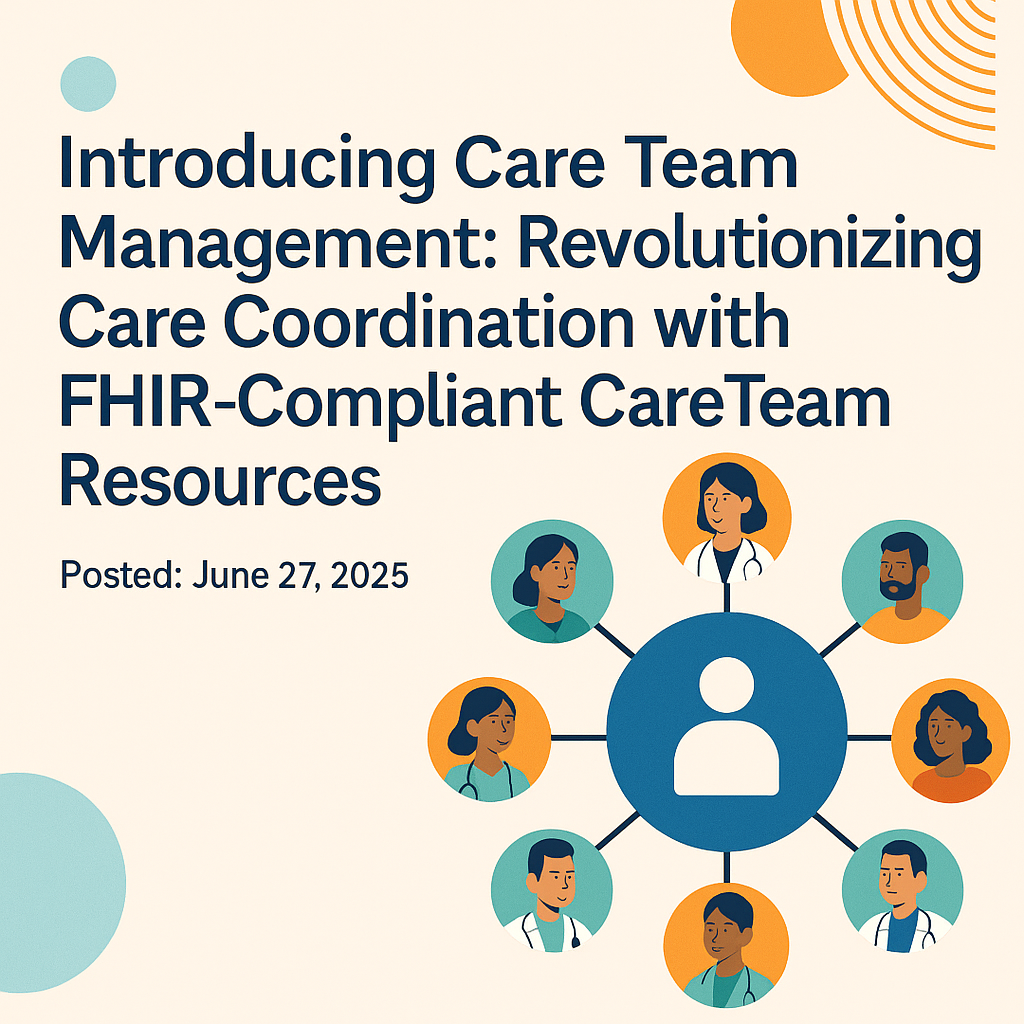
Introducing Care Team Management: Revolutionizing Care Coordination with FHIR

· 4 min read
Mat Coolidge
Founder/CEO previously at Cleveland Clinic, FHIR Evangelist, User Experience Expert, and Healthcare Innovator
Care Team Management interface showing provider availability

Remember the last time you tried to coordinate a family vacation? Getting everyone on the same page about dates, locations, and who's bringing what feels like herding cats. Now imagine that scenario, but with patient lives on the line, HIPAA compliance requirements, and the pressure of delivering exceptional healthcare. Welcome to care coordination in 2025.

The "Who's Driving This Thing?" Problem

We've all been there. A patient needs coordinated care from multiple specialists, but nobody's quite sure who's steering the ship. Is it the primary care physician? The cardiologist who saw them last? The care coordinator who's been frantically calling around trying to get everyone aligned?

Our latest release tackles this head-on with comprehensive Care Team Management and honestly, it's about time healthcare caught up with what project management figured out decades ago.

What's New: Your Care Team Command Center

Think of this as your mission control for patient care. Here's what we've built:

Full FHIR CareTeam Resource Support

We're not just bolting on another feature we've implemented this the right way, with full FHIR R4 compliance. This means your care teams integrate seamlessly with existing EHR systems, not against them. It's like finally getting that universal remote that actually works with all your devices.

Provider Role Management That Actually Makes Sense

Remember when you had to choose between "Doctor" and "Nurse" and pray that covered everyone? Our new provider role management system lets you create custom roles, set availability schedules, and handle automated validation. Whether you're dealing with a clinical pharmacist, a patient navigator, or a wound care specialist, the system adapts to your reality. on duty, who's with patients, and who just stepped out for lunch (because yes, healthcare workers do eat occasionally).

The Technical Stuff (For Those Who Care)

Behind the scenes, we've rebuilt our care team architecture from the ground up. The new system handles:

  • Dynamic team composition (because healthcare teams change as patient needs evolve)
  • Role-based permissions (so everyone sees what they need to see, nothing more)
  • Automated notifications (because nobody has time to manually update 15 people every time something changes)
  • Integration with existing workflows (because throwing out everything and starting over is not an option in healthcare)

What This Means for Your Daily Life

Let's be honest most "revolutionary" healthcare technology feels more like evolution at the speed of molasses. But this is different. Here's what you can expect:

Faster Patient Handoffs

No more "Is Dr. Smith still following this patient?" mysteries. The care team roster is always current, always visible, and always actionable.

Better Continuity of Care

When providers know exactly who else is involved in a patient's care, they make better decisions. It's like having the full picture instead of just one piece of the puzzle.

The "But Wait, There's More" Moment

This isn't just about managing existing care teams it's about making it ridiculously easy to build better ones. Need to add a mental health counselor to a diabetes patient's care team? Two clicks. Want to temporarily bring in a specialist for a complex case? Done. Need to reassign care coordination responsibilities? No problem.

What's Next?

We're already working on the next evolution: AI-powered care team suggestions. Imagine a system that learns from successful care team compositions and suggests optimal team configurations for new patients based on their diagnosis, complexity, and available resources.

But for now, we're just excited to see how this transforms your daily workflow. Because at the end of the day, better care coordination isn't just about efficiency it's about giving patients the coordinated, comprehensive care they deserve.

Ready to revolutionize your care coordination? The new Care Team Management features are available now. Questions? We're here to help you get set up.


P.S. - If you're one of those early adopters who's already using these features, we'd love to hear your stories. Drop us a line at [email protected] we're always looking for real-world examples of how these tools make a difference.

GTM Infra: The Missing Piece in Healthcare Ops

· 4 min read
Mat Coolidge
Founder/CEO previously at Cleveland Clinic, FHIR Evangelist, User Experience Expert, and Healthcare Innovator
gtm

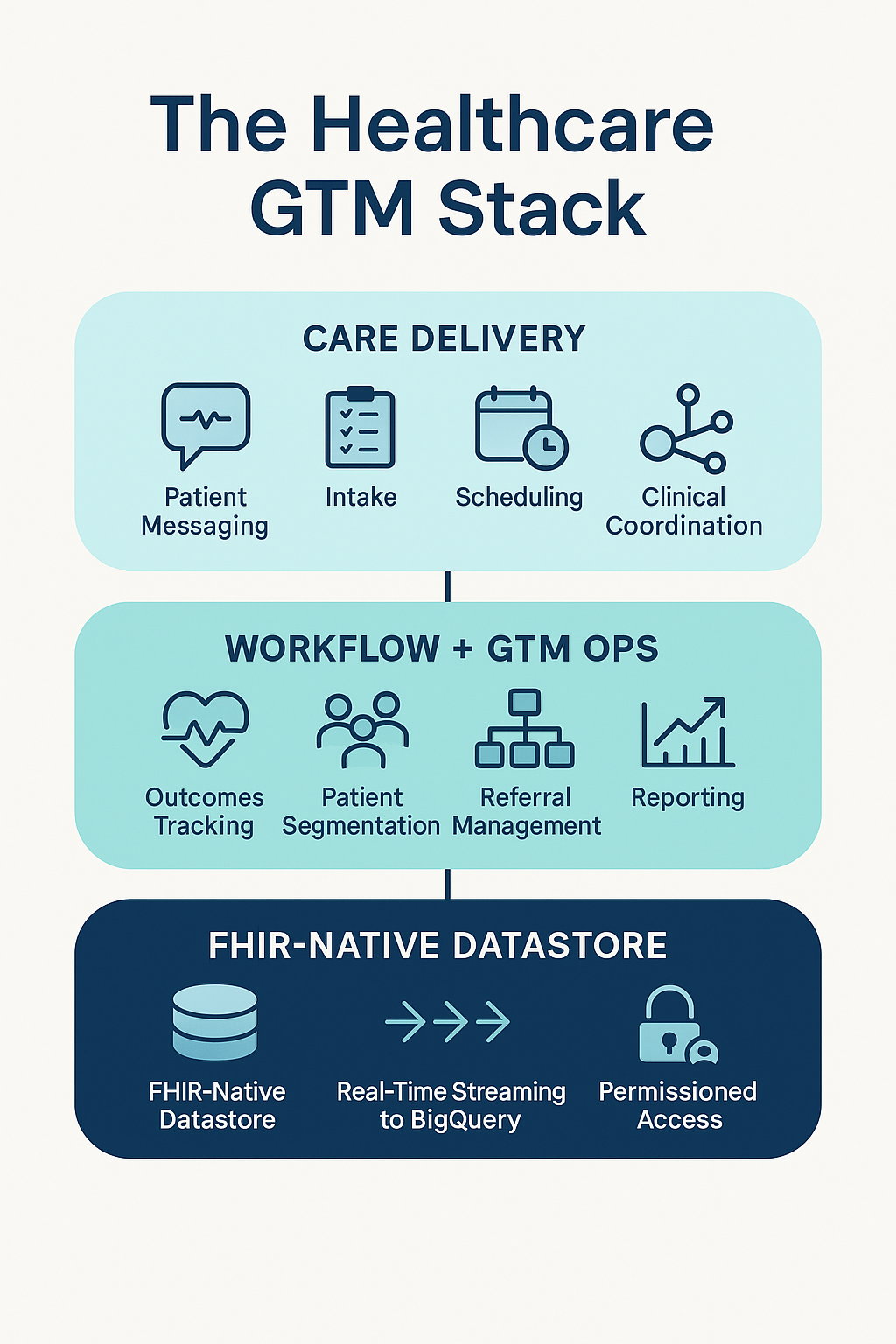
The Quiet Revolution: Why GTM Infra is the Missing Piece in Healthcare Ops

Beyond the CRM: Why the Next Wave of GTM Innovation Starts With the Data Layer

The best GTM strategies don’t start with a sales deck, they start with clean, accessible data.

If you’ve ever read a RevOps playbook and thought, “This is great, but what about clinical operations? What about providers trying to stand up care programs on the fly, in a regulated minefield, using duct-taped tools from 2006?”—you’re not alone.

The latest post from The Signal, "The Platform Democratizing GTM Engineering", nails something we’ve believed for a long time at CareLaunch: GTM is no longer just about marketing and sales. It’s about execution at scale, and that starts with infrastructure.

At CareLaunch, we call this the foundational data layer for care delivery. But if you squint, it’s really just healthcare’s version of GTM infra.


1. From Sales Ops to Care Ops: Same Bottlenecks, New Stakes

Traditional GTM teams struggle to move quickly because data lives in silos, tooling requires engineering support, and processes are too brittle to adapt mid-launch.

Sound familiar?

Healthcare orgs especially digital health startups and multi site provider groups face the same challenges, but with higher stakes. Instead of missed leads, it’s missed follow-ups. Instead of lost MRR, it’s dropped patients. Instead of poor sales attribution, it’s poor outcomes tracking.

That’s why we built CareLaunch to be more than a CRM. It’s a composable platform that sits at the center of care coordination, patient communications, outcomes measurement and yes, growth.


2. Why “GTM Infra” Isn’t Just for SaaS

Platforms like Common Paper and Retool are changing how non-technical teams launch, iterate, and optimize. They’ve cracked the code by giving go-to-market teams access to developer-grade tools without the overhead.

CareLaunch is doing the same, but for healthcare.

Need to spin up a new intake flow? Launch a self-pay offering? Send an outcomes survey based on a FHIR encounter? You don’t need six tools and a sprint cycle. You need the ability to build in the flow of work. And you need data you can trust, structured and ready for use across every part of your business.


3. Data as Leverage, Not Liability

You’ve heard the interoperability promise before: “integrated,” “connected,” “talking systems.”

Too often, that just means more complicated interfaces.

We went the other way. CareLaunch is FHIR-native, built on a composable architecture that streams structured data (in real-time) to BigQuery. No glue code. No data silos.

This matters more than it sounds. Because this isn’t just CRM data. We’re talking:

  • Clinical observations
  • PROs and patient adherence
  • Resource utilization
  • Health economic endpoints
  • Signals across intake, messaging, and care coordination

When you structure this natively, you unlock next level GTM: signal stacking, async models, outcomes based workflows, and analytics that cross the aisle—from clinical to commercial.


4. Move Fast. Stay Compliant. Scale Intelligently.

We didn’t just wrap a pretty UI around clunky EHR infrastructure. We built a care first GTM engine that’s HIPAA compliant, composable, and ready to scale.

That means:

  • No waiting on your dev team to launch a new service line
  • No more vendor Frankenstack to glue together chat, intake, scheduling, and reporting
  • No more flying blind on what’s working or not in your funnel

You can go from MVP to multi-state rollout with a platform that flexes as you do.


The TL;DR

If you’re building in healthcare and care delivery is your product, then GTM isn’t a downstream afterthought, it’s baked into everything you do.

CareLaunch gives you the infrastructure to move like a SaaS company and scale like a system. One platform, every patient touchpoint, all in one place.

Want to see what healthcare GTM infra actually looks like in practice?

Book a demo—or better yet, start building.

AI in Healthcare 2025: All-In or Left Behind?

· 4 min read
Mat Coolidge
Founder/CEO previously at Cleveland Clinic, FHIR Evangelist, User Experience Expert, and Healthcare Innovator
allin

Artificial intelligence (AI) is no longer the future of healthcare, it’s here, reshaping the industry in ways that are both exciting and unsettling. As we dive deeper into 2025, one thing is clear: healthcare organizations must go all-in on AI or risk irrelevance. Let’s explore the practical applications, unresolved challenges, and predictions for the future of AI in healthcare.

The New Reality: AI as Healthcare’s Backbone

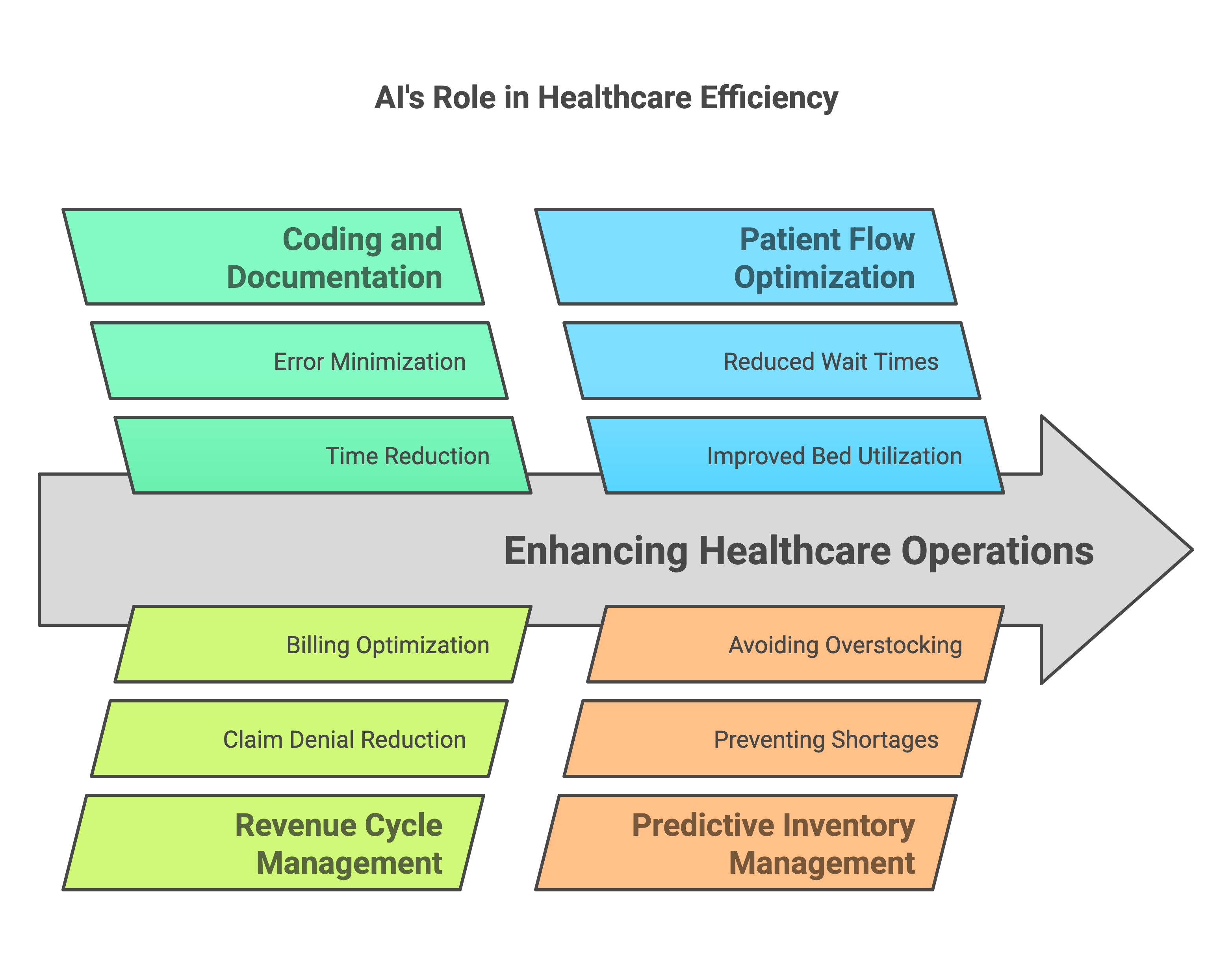
Forget the sci-fi visions of robot doctors. In the real world, AI’s biggest impact is already behind the scenes, where it’s quietly transforming healthcare administration and operations. Hospitals and clinics are embracing AI to streamline paperwork, manage patient flow, and even forecast supply shortages. Yet, this pragmatic adoption is just the beginning.

backbone

Game-Changing Applications

Here’s how AI is making waves:

  • Coding and Documentation: AI tools are slashing the time and errors in medical coding, saving billions annually.
  • Revenue Cycle Management: From claim denials to billing optimizations, AI is turning healthcare’s financial nightmare into a manageable dream.
  • Patient Flow Optimization: Hospitals like Cleveland Clinic have leveraged AI to reduce patient wait times and improve bed utilization, saving millions in the process.
  • Predictive Inventory Management: AI’s ability to predict supply needs prevents shortages and overstocking, ensuring resources are always where they’re needed most.

The Controversial Side: AI as a Double-Edged Sword

While AI’s potential is undeniable, the path forward isn’t without controversy. Ethical questions loom large: Who owns the data? How do we prevent algorithmic bias? And what happens to the human touch in healthcare?

  • Data Privacy Wars: With data breaches hitting headlines, can we trust AI with sensitive patient information? While AI strengthens security, its reliance on massive datasets makes it a tempting target for cybercriminals.
  • Human vs. Machine: A Pew study reveals 60% of Americans feel uneasy about AI’s role in their healthcare. This distrust isn’t misplaced, given that even small errors in AI-driven diagnostics could have devastating consequences.

Predictions: What’s Next?

whats next

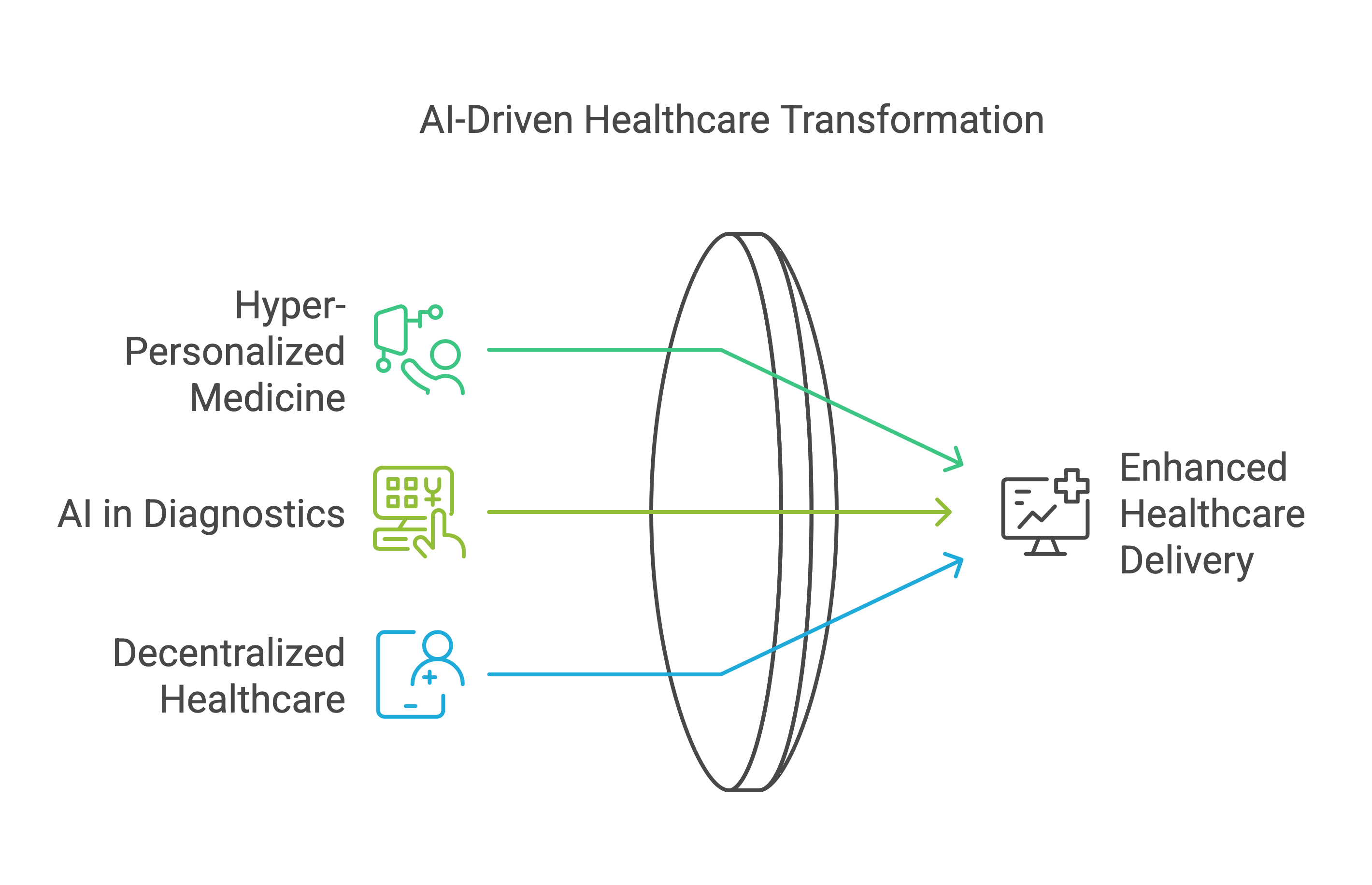
The future of AI in healthcare will be defined by three major trends:

  1. Hyper-Personalized Medicine: AI will use genomics and lifestyle data to tailor treatments, creating a world where one-size-fits-all medicine becomes obsolete.
  2. AI in Diagnostics: Expect AI to dominate in early disease detection. Think Alzheimer’s identified a decade earlier, or cancer spotted before symptoms emerge.
  3. Decentralized Healthcare: With AI-driven telehealth and mobile health apps, care will become increasingly accessible, especially in underserved regions.

But here’s the our take: By 2035, we predict that healthcare organizations not leveraging AI at scale will either merge with AI-first competitors or close their doors entirely. The AI revolution in healthcare isn’t optional, it’s existential.

Making AI Work: The Playbook

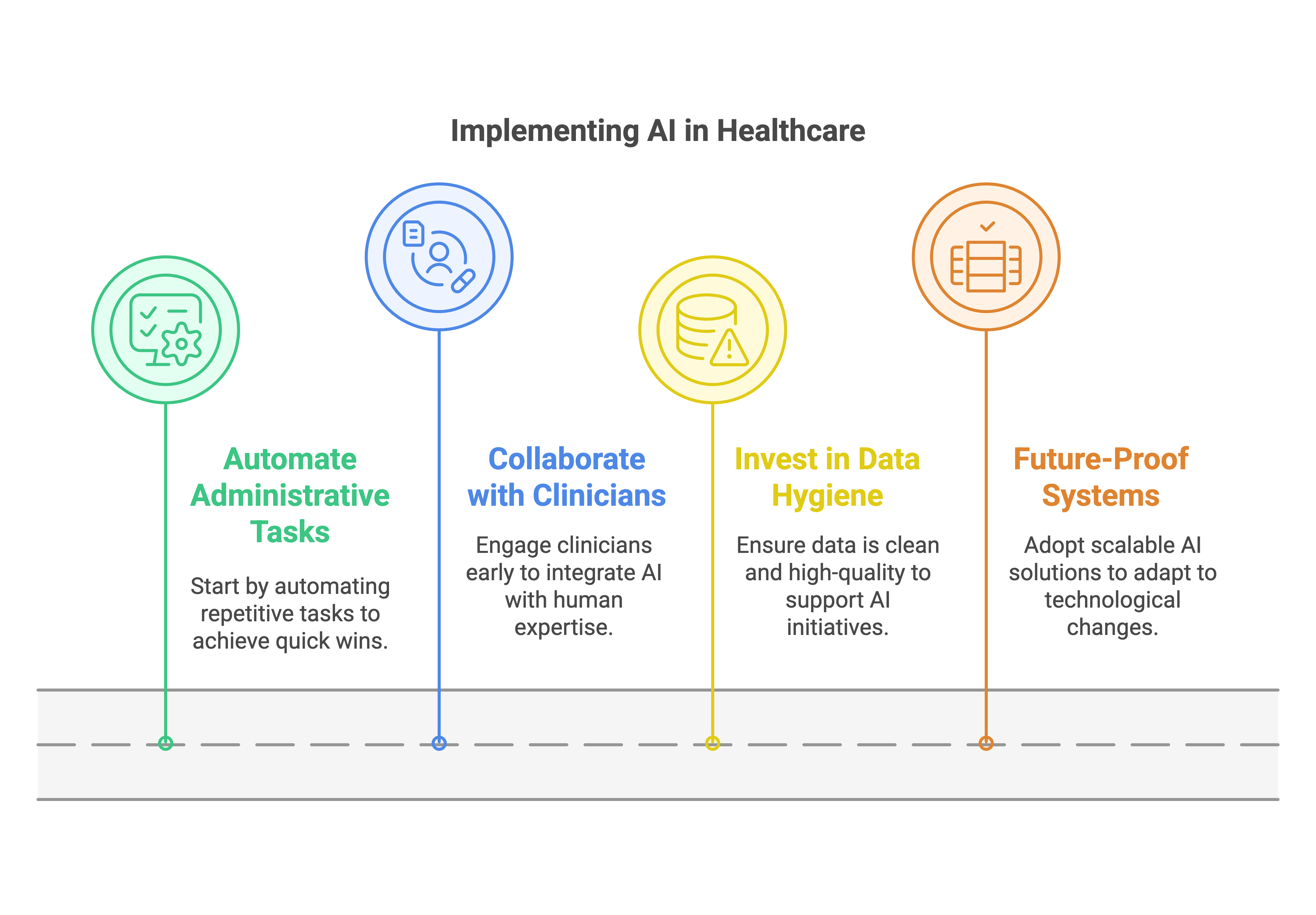
implementation

For those ready to embrace AI, here’s how to do it right:

  1. Start with Low-Hanging Fruit: Automate repetitive administrative tasks first. This delivers quick wins and builds organizational confidence.
  2. Collaborate, Don’t Dictate: AI works best when integrated with human expertise. Engage clinicians early to avoid resistance.
  3. Invest in Data Hygiene: Clean, high-quality data is the lifeblood of AI. Skimp here, and your AI initiatives will flounder.
  4. Future-Proof Your Systems: Adopt scalable AI solutions to stay ahead as technology evolves.

Conclusion: All-In or Left Behind?

AI in healthcare is a revolution, not an evolution. The organizations that thrive will be those bold enough to go all-in. This isn’t just about efficiency or cost-savings—it’s about redefining what’s possible in patient care. So, are you ready to embrace the AI future, or will you be one of the laggards left behind?